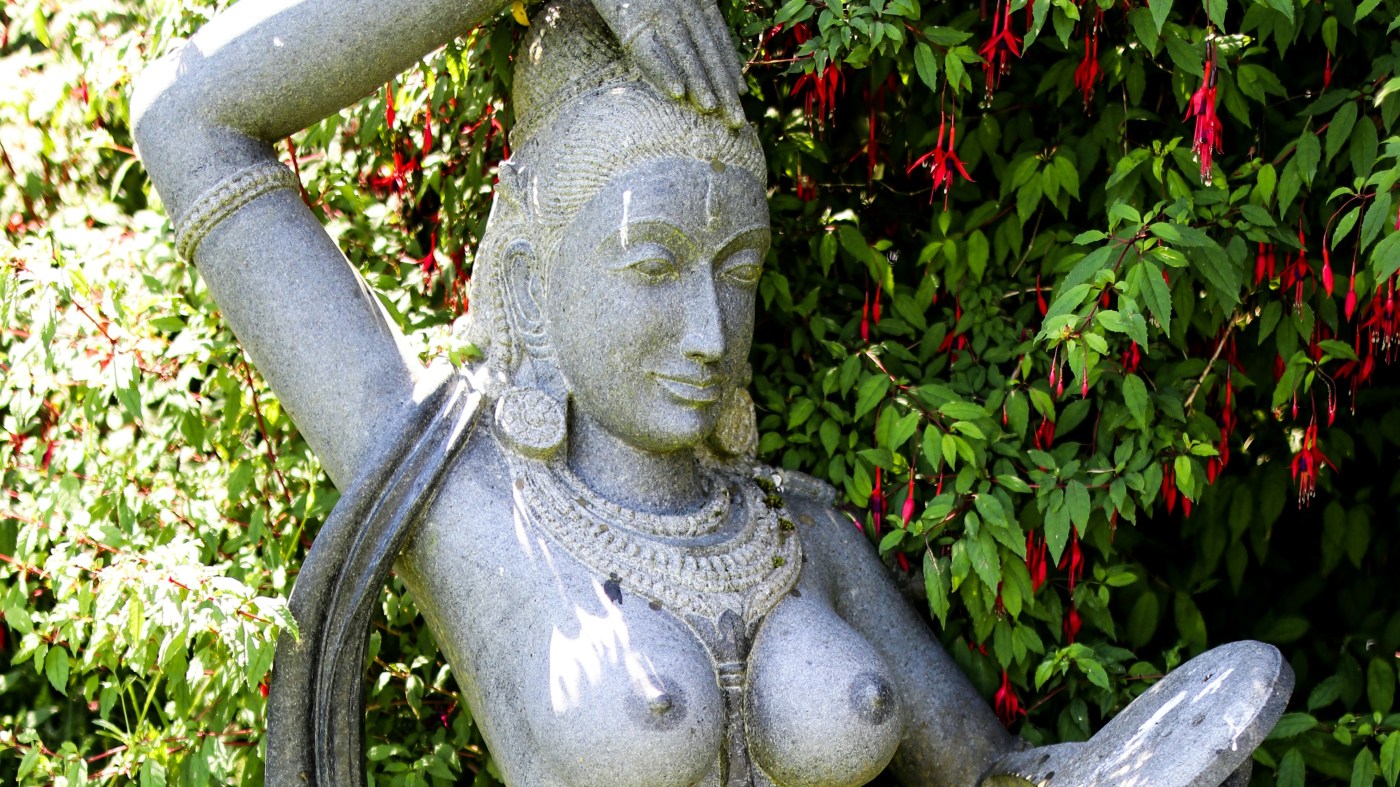
In ancient India, a sultan had three adult sons. Their names were Hussain, Ali and Ahmed. The sultan was also taking care of a foreign sultan’s daughter named Nur Al-Nahar as a favour after her father’s death. The sultan’s three sons quickly enamored the princess, as her character was as gentle as a lamb, her mind as sharp as a rose’s thorns and her features as beautiful as a sunset over the sea.
Thus, the sultan sent his three sons on a quest to bring the best gift to the princess. The one who would bring the best present could marry her. The sons set out to an inn outside the city and decided to be back in a year exactly and wait for the others.
Hussain, the eldest son, travelled to the indian city of Bisnagar to look for his gift. He pretended to be a foreign merchant and got cozy at the local khan, then walked to the markets. He searched every stall for the perfect gift, and saw everything from jewels to rare wallpapers and rich fabrics, but couldn’t decide until he fell upon an auctioneer trying to sell what seemed like an overpriced carpet.
At first sight, the market looked simple, without frills or added embroidery, but after questioning the merchant, the prince learned that the carpet had alleged special powers.
Indeed, anyone sitting on it could travel instantly to their destination only by thinking about it. Despite being doubtful, Hussain thought he would never find a better suited gift and bought the carpet instantly after the auctioneer demonstrated its use.
The oldest brother then spent the rest of the year experiencing the beauty of Bisnagar, from its music played jointly by humans and elephants to the rituals in its multiple temples. He ate good food and had a wonderful time, until he had to go back to the inn where he had left his brothers, at which he arrived first.
Ali, the second-born son, travelled to Shiraz, Persia, for his quest. After getting a room at the local khan, the prince searched for the most wonderful gift he could bring the princess. Among the gems golden and silver jewels, imported silks, fine art and other precious and rare objects, Ali noticed an auctioneer holding a strange ivory tube.
When he approched the stall to inquire about the apparatus, the seller assured him that this was no ordinary tube. He explained that it also had a piece of magic glass on each end, allowing the onlooker to lay eyes upon any which thing or person he desired.
Prince Ali thus tried to look through the telescope, meaning to see his father. He then saw the sultan sitting on his throne with his advisors chatting close by. Ali thought about Princess Nur Al-Nahar and, instantly, saw her sitting at her vanity, surrounded by her ladies and laughing. Ali smiled. It warmed his heart to see her face. He then turned to the merchant, paid him and left with his telescope, knowing full well he would not find a more perfect gift for the princess as this one.
Following his purchase, the prince set out to satisfy his curiosity and explore Shiraz and its local customs, meaning to enjoy the rest of the year that was allotted for his quest as much as possible. Once he neared the end of the year, Prince Ali left the khan and came back to the agreed upon meeting spot, where he found Prince Hussain already present.
Prince Ahmed, the youngest son, took the path of Samarkand, Uzbekistan, to complete his quest. After getting a room at a khan in the city for his stay, Ahmed went straight to the local bezistan. There, after looking at the most majestic jewels, fabrics and adornments, the prince stumbled upon an auctioneer selling a simple apple — or so it seemed — for an exhorbitant price.
When questioning the man, Ahmed learned that the apple could cure any disease known to humans. While the prince was initially dubious of the auctioneer, several passerbys confirmed his words as Ahmed questioned him.
Convinced, Prince Ahmed purchases the apple and set out to go back to the khan. Once arrived, he put the apple away safely, then wondered what he could do for the rest of the year, as he was confident he would not find a gift better suited for Princess Nur Al-Nahar.
Thus, the prince spent the rest of his allotted time exploring the city of Sakarmand, visiting the Surkhan Valley and learning about the local traditions or tasting typical foods of the region. Once the year was almost over, he set out for the meeting place his brothers and him had agreed upon and arrived last at the inn.
Reunited after a year, the brothers kissed and hugged, happy to see each other again. Then, they agreed to show each other their acquired gifts. Prince Hussain started by sharing the magical properties of his carpet.
Impressed, Prince Ali went on to show the capacities of his telescope, but when he tried to look through the instrument to show his brothers Nur Al-Nahar, his face fell.
“What did you see, brother?” asked the oldest sibling.
“Princess Nur Al-Nahar is very sick. I just saw her dying self in her bed surrounded by her ladies and eunuchs,” explained Ali.
His two brothers looked through the ivory tube and saw the same scene as their middle sibling had.
“Hopefully, the gift I have brought can help the princess,” said Ahmed while retrieving the apple from his bag.
The youngest brother then explained the properties of the magical fruit. The three princes agreed to ride the carpet together and were fast arrived in the princess’ room. Although surprised to see them appear out of nowhere, the ladies and the eunuchs easily recognized the princess and soon made way for Prince Ahmed to bring the artificial fruit to Nur Al-Nahar’s nose, curing her instantly of her illness.
Once they welcomed the princess back to health, the brothers went to see their father to announce the good news as well as to present the objects of their quests. After handing the sultan the carpet, the telescope and the apple, the princes asked their father to make a decision on the best gift. This decision would determine who would win the hand of the princess in marriage, as was promised.
The sultan reflected for a few moments, before coming to the conclusion that he could not choose a single gift as the best, since all three had been necessary to save the princess.
The sultan followed these words by explaining that he was very thankful for the usefulness of these gifts and still wanted one of his sons to marry the princess, so he devised a plan to steer his judgement in the direction of a winner.
The princes would have to exit the city and find a meadow in which to have an archery contest. The one who sent his arrow the farthest would be declared the winner and be granted Nur Al-Nahar’s hand in marriage. The princes agreed and set out for the meadow with their bows and arrows.
As soon as the sultan joined the brothers in the meadow, Prince Hussain shot the first arrow, which went far ahead. Prince Ali then did the same, sending his a little further. Lastly, Prince Ahmed shot his arrow so far that no one could find it.
Despite knowing Ahmed had shot it farther, the sultan could not be swayed to give the win to Ahmed, as there was no proof to his feat. The father thus took the side of Ali and planned the nuptials for the next day.
Hussain refused to attend the wedding, stating his sorrow was too humongous to see the princess bethroted to another. Instead, he joined the ranks of an honourable scheikh after renouncing his right to the throne.
Ahmed, on his end, also refused to attend the wedding, but didn’t reject his world like Hussain had done. He rather went back to the archery meadow and followed the path of the arrows. He passed by the areas where Hussain’s and Ali’s arrows were found, then looked left and right while he kept going forward.
The prince walked so far ahead that he was certain he must have missed the arrow, as he could in no way had shot it that far without a divine intervention. Still, he prince kept walking until he reached tall spiky rocks blocking his path. His curiosity still going strong, Ahmed started walking around the stones to find his missing object.
By then, he had reached a distance of roughly four leagues from where he had started. Ahmed then saw an arrow in the distance, close to the rocks. He walked towards it and recognized his own. The prince picked up the arrow to look at it more closely.
“It’s definitely my arrow, but no one — neither me nor any other human — could have shot it that far,” thought the prince. “Perhaps this weird event that deprived me of the object of my desire can bring forth something positive. Let’s see…”
Ahmed walked closer to the rock formation and entered one of the openings, allowing him to go deeper in the stones. As he walked further in the opening, Ahmed reached an iron door without a lock, which he opened right away. On the other side, he found an enlightened hall leading to the most wonderful palace he had ever seen. As it was, the most magnificent women he had ever laid eyes on was walking towards him, surrounded by her ladies.
Before he could utter a word, the woman spoke.
“Welcome, Prince Ahmed. I am Paribanu, the ruler of this palace.”
Ahmed got down to his knees, dazzled by the beauty of the one that stood before him. The woman then led him to a living room she stated was the least beautiful room of her palace. When they entered the space, Prince Ahmed could not believe his eyes, as the ceiling, the walls and the flooring were all made of gold and ornated with lapiz-lazuli.
After sitting beside the woman on a luxurious cushion by hers, Prince Ahmed complimented Paribanu on her palace, saying he had never seen anything like it before. The lady politely apologized and explained to him that she was the daughter of a jinn, a jinnya. She also admitted to be the one who made his arrow fly towards the stones covering her palace, as she was enamored of him when she had seen him previously.
Paribanu also shared that she knew of his and his brothers’ quest to win Nur Al-Nahar’s hand in marriage and that she had moved his arrow to keep him to herself.
The prince, who could see no woman would ever be equal to Paribanu neither in beauty nor in wit, got down to the floor and kissed the foot of her dress, thanking her for her actions. The jinnya gave out her hand to be kissed and the prince did so without restraint or hesitation. Then, the woman asked him, unlike most ladies at the time, but not so out of character for her kind, if he wanted to marry her. The prince agreed.
“Then, we are married, for my people do not need more ceremony than a faithful and truthful agreement to marry,” she said. “Tonight, we will have dinner to celebrate, but, before that, let me show you my palace.”
The jinnya proceeded to show him around, proving that the room they had just been in was in fact the least impressive in her home. Following the tour, Ahmed and his bride shared a meal of the most delicious concotions he had ever tasted. He drank the best wine he ever had and listened to the most beautiful music ever. When everyone’s plate was empited, Ahmed saw a group of jinn and jinnya share a most wonderful dance in a gorgeous ball.
Once the night was getting old, Ahmed and his bride were led to the master bedroom by the mistress’s ladies and spent their wedding night loving each other as only newlyweds can.
After having been married to the jinnya for six months now, Prince Ahmed was starting to miss his father. He thus asked his wife permission to go and visit him in his palace, knowing full well that his father had not heard from him since the day of his brother’s wedding and might be thinking the worst of the worst for his fate.
His bride got worried that he was using the excuse of visiting his father to abandon her and shared her sorrows with Ahmed. Assuring her he would never do such a thing, Prince Ahmed promised to stay with her as he would never cause her sorrow by making her believe he wanted to leave her.
During that time, the sultan was worried sick about his youngest’s son’s whereabouts and had ordered his general to look for him everywhere. As no one could find him in his kingdom or the next, the father was starting to lose hope. He called a sorceress to his side in order to help him find his son. Still, no one could find him.
Meanwhile, Ahmed had started missing his father, so much so that he kept inadvertantly talking about him to his bride. He did it so much that, after a month, Paribanu told Ahmed that she was confident in the prince’s love for her and wanted him to go visit his father once a month. She got him the best dress and horse for his visit, as well as twenty cavaliers to accompany him. Her only condition for her husband’s departure was that he’d come back to her.
Thus, the prince departed for his father’s palace. The sultan and his son were glad to see each other after so many months apart! The sultan’s fears were brushed aside when the prince explained, without giving details, per his wife’s instructions, that he was well and happy.
Ahmed stayed at the palace for three days and three nights and, without further ceremony, left on the morning of the fourth day to go back to his wife. Paribanu could not be happier when she saw her husband enter her palace doors, as she had retained a slight worry that he would not come back. She hugged and kissed him welcome, and he returned her affection tenfold.
A month later, the jinnya, knowing her husband very well by then, asked him why he had not visited his father again, as she thought one month between each visit was a good length of time.
“I did not want to upset you by asking,” Ahmed responded.
Paribanu reassured him that she wanted him to have a relationship with his father as she knew it would make him happy. She insisted he took the habit of visiting the sultan monthly. She only asked of her husband to go back to her afterwards.
And so, Prince Ahmed took the habit of visiting his father once a month.
In the sultan’s palace, all visirs but one were growing more and more weary of Prince Ahmed. They noticed he not only always paraded his dress and men when he visited, but he always seemed to be fresh when he arrived, betraying his location as to not be far from the sultan’s palace.
Ahmed’s father eventually grew weary as well. He hired the sorceress from before to follow his son when he left the palace next and find out where he was going.
Thus, the sorceress followed Ahmed and his crew all the way to the giant stones. However, when she tried to go after them inside the rocks, she could not find the iron door, as it was only visible to those Paribanu wanted to have as guests. It was completely invisible to the sorceress!
She went back to the sultan’s side and decided to wait for the following month and guard the entrance for the moment the group would reappear.
When Ahmed and his followers found her outside the rocks, the sorceress was pretending to be ill and in need of assistane. The prince soon brought her beyond the wooden door and the group was soon welcomed by a worried Paribanu, who wondered why they had come back so fast. The jinnya sent her ladies to care for the sorceress and bring her to a room.
Once the visitor was out of earshot, Paribanu told her husband that the sorceress was faking her illness and that something was going on. Confused, but understanding, Ahmed set to depart once again with his men.
Meanwhile, the ladies who had brought the sorceress to a room had also given her water from the oasis of lions, which was supposed to cure any illness. The sorceress thus faked having been cured when the ladies came back to the room an hour later.
The sorceress was brought before the jinnya before leaving, but was in such a hurry to go back to the sultan, she forgot to even enquire about seeing the palace in its entirerity. Paribanu, as generous of a host as she was, still offered a tour to the woman, which she gladly accepted before following her guides.
By the time Prince Ahmed and his following had reached the palace doors, the sorceress had already finished her tour and was on her way to the sultan herself. She entered the city by the side gates, created a labyrinth trail in the streets before entering the palace by the servants’ entrance, invisible.
She then visited the sultan in his throne room and told him all about what she had seen under the giant stones. The sorceress revealed to the sultan that prince Ahmed had married a jinnya of such wealth and power that they could not be equaled.
The visirs wanted to arrest the prince and his men before throwing them in jail before they usurped the power. The sorceress, on her end, disapproved of the idea and suggested the ruler that he shared his knowledge of the marriage with his son and ask him a favour on behalf of his wife.
The woman thought Ahmed ran the chance of overruling his father by visiting and parading such wealth. Thus, she thought the sultan should ask something so difficult from his wife that Prince Ahmed would refuse and never come back to the palace. The gift the woman advised the sultan to ask was a war pavilion so big it could cover his whole army, but also be able to fit in his hand.
The sultan went with the sorceress’ idea and asked his son to be presented before him so he could make his special demand.
When Ahmed went home and came back to Paribanu, he was in a sad mood. He had never asked his wife for anything, as he considered she had already shared enough of her wealth with him. But Paribanu could see something was off from his expression and got scared that his father had perhaps passed during his visit.
“No such thing, my love.” started Ahmed. “It’s only that, despite my best abilities, my father found out about our marriage and now wants you to provide him with a gift.”
The prince seemed defeated, but his wife assured him she would love to get the gift his father asked.
After Ahmed shared what the request was, Paribanu asked for her treasurer, Nurighan, and told her to bring the best war pavilion from her treasury. Nurighan then brought her a tiny pavilion that could fit in the palm of her hand and gave it to Ahmed.
The prince initially thought the gift a prank as it was so small, but his wife assured him the object could cover a field twice the size of his father’s army once unfolded.
Hence, on his next visit to the sultan, the prince brought his father the gift, which he undolfed before his eyes in a field to proved his word. Slightly jealous of the power of his son’s wife, the sultan asked his visirs and the sorceress about what he should do next to prevent his son from stealing his throne.
The sorceress advised the sultan to ask his son’s wife for water from the oasis of lions, as it could cure any illness. The sultan then asked his son before he left for the liquid with magical properties.
Prince Ahmed again returned to his and his wife’s palace with a grey expression. Unsure how to ask, he awkwardly shared the demand with his wife who agreed, but did not want him of the bad intentions behind the demand, as this one was dangerous. Paribanu said he would need to gather a skein of yarn, a sheep cut up in four quarters and a special vase. After bringing all the items over the next month, Ahmed returned to his wife’s side and carefully listened to her instructions.
“You will need to go to an oasis in the middle of a castle’s yard to retrieve the water. Two of the four lions stay awake while the other two sleep, and they alterate so there will always be two woke lions by the oasis. First, take skein of yarn and roll it towards the castle doors. Then, as the doors will be open, you will be able to see the lions. You will throw the quarters of sheep through the door. As they feast on them, ride your horse to the oasis and never step down. You will take the vase and fill up with water, while carefully remaining on your horse and exit the castle still on your ride.”
Ahmed completed all the steps to gather the water, but as he was exiting the castle, the two woke lions started following him. He rode faster and faster, and the lions started running as fast as the horse. The felines followed him all the way to the city gates and onto the streets, scaring the commonfolk in the area. The lions only turned around when Prince Ahmed finally reached his father’s palace.
The youngest son brought his father the precious liquid from the oasis of lions and hoped that would be the sultan’s last demand. But the sultan was turning green from jealousy for his son. His greed was humongous, just like his suspicious, the later fed everyday by his visirs’ opinions on the topic. All that made him ask for even more from Ahmed and his wife Paribanu.
“Son, I want you to bring a man that is only one and half foot tall, has a thirty-foot-long beard, carries a five-hundred-pound iron bar as a double-headed stick, and knows how to speak,” asked the sultan, proud of his request.
While doubting the feasability of the demand, Ahmed promised to do his best and ask his wife if she could provide him with such a man, if such a man even existed!
Thus, Prince Ahmed returned to his home and asked his wife for the man his father described, taking care to say he was ashamed huis father made another demand. Paribanu assured her husband the request could easily be fulfilled, as the man in question was her brother, Schaïbar.
The jinnya asked Nurighan for a small golden saucepan. After she brought it, Paribanu lit a small fire in it, poured a bottle of liquid Nurighan had also given her and waited for a thick smoke to appear around them.
Before long, a man of one and a half foot in height was standing before them. Had he not been his wife’s brother, Ahmed would have been scared of his appearance, but the family link made him welcome the man with open arms. Paribanu then explained to Schaïbar that the sultan had asked to see him.
Thus, both men rode towards the sultan’s palace. As they passed through the city, people got scared of Schaïbar’s appearance mixed with his holding of a heavy iron bar. When the duo reached the palace gates, the guards ran away at the sight, leaving the doors opened for them to pass though. Ahmed and Schaïbar got off their horses and approached the entrance before heading for the throne room. On the way, the servants hid their faces and ran away terrified of the short man who had penetrated the palace.
Ahmed and his brother-in-law entered the throne room, where visirs and servants screamed in fear at the sight. The sultan also hid his face with his hands as Ahmed was introducing his guest.
Schaïbar got upset at the terrible welcome he was receiving, hating the lack of hospitality from the sultan who had asked for him.
“I will show you what you deserve,” he said, hitting the ruler on the head with his five-hundred-pound iron bar. “And you, you are the wicked tongues who poisoned the image the sultan had of his son,” he added, killing the visir with as many strokes as there were bodies.
Ahmed could do nothing to prevent the killing other than tell Schaïbar not to kill one of the visirs, who he knew had defended the prince and advised his father with grace for many years. Then, the visir, Ahmed and Schaïbar walked around the palace until they were in the courtyard and encountered the sorceress.
Bam! And she, too, was lying dead on the ground.
“Now, we will walk through the city and squish whoever doesn’t recognize you as their new sultan,” said Schaïbar to Ahmed.
Unsurprisingly, everyone kneeled before Ahmed in both fear and admiration, recognizing him as their new ruler. Then, Ahmed and Schaïbar returned to the palace under the stones to get Paribanu and make the commonfolk recognize her as the new sultan’s wife.
In the following days, Sultan Ahmed divided his territory to gift his brother Ali and his wife Nur Al-Nahar some land, as they had not participated in the collusion to get rid of Ahmed. The new sultan also tried to gift land to his brother Hussain, but the eldest was happy with his current lifetsyle and refused.
Sultan Ahmed and the jinnya Paribanu ruled their land for many decades in peace and honesty.
The serie Obscure Fairy Tales encompasses an array of tales, myths and legends from around the world. To read more, visit this page dedicated to fiction writing.
 Kelly Asselin-Tousignant
Leave a comment